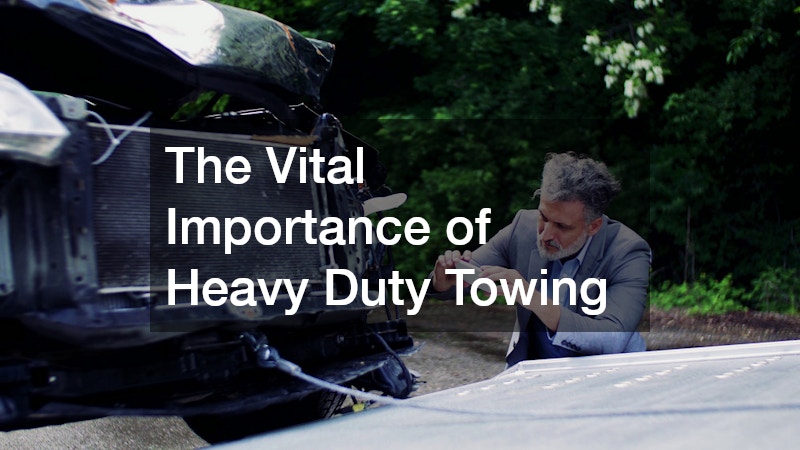
This capability ensures that even the most daunting roadside challenges are managed with efficiency and precision. Without heavy duty towing, the logistics of transporting incapacitated large vehicles would be nearly impossible.
Heavy duty towing requires a distinct set of skills and expertise from operators. Personnel are trained to handle complex towing situations that involve significant risk and technical challenges. Many scenarios involve precarious recovery situations where careful calculation and execution are paramount. Extensive training allows operators to assess situations quickly and determine the safest and most effective method for towing. This specialized knowledge not only facilitates the safe transport of heavyweight vehicles but also ensures minimal damage during the towing process.
The equipment used in heavy duty towing is impressive due to both its size and power. Heavy duty tow trucks are equipped with hydraulic systems and advanced winch mechanisms, which are capable of exerting tremendous pulling force. These machines can recover vehicles from challenging off-road conditions and even vehicles that are overturned. Such specialized equipment underscores the robust capability required in heavy duty towing operations. Consequently, communities and industries benefit from a service that maintains the flow of major transportation routes.
Challenges in Heavy Duty Towing
The operation of heavy duty towing rigs encounters various challenges that necessitate a high degree of professionalism. Severe weather conditions, tight urban environments, and complex traffic dynamics often hinder operations. Each challenge presents unique risks that can impact the safety of operators and other road users. As such, tow truck operators must constantly adapt and employ ingenious solutions to overcome these obstacles. This adaptation ensures that tows are conducted efficiently, reducing the time vehicles spend in precarious positions.
Another significant challenge involves the coordination with law enforcement and emergency services. Heavy duty tows often occur in distressing situations such as accidents or breakdowns that affect public safety. Proper coordination ensures that road closures, traffic diversions, and the safety of all involved parties are managed expertly. This collaboration is pivotal to the effective execution of large towing operations and contributes significantly to the overall safety of emergency responses. Through this collaboration, heavy duty towing becomes an integral part of the larger safety net on roads.
Additionally, navigating the regulatory landscape of heavy duty towing presents its own set of challenges. Operators must understand and comply with various legal and insurance requirements that vary by region. Failure to adhere to these requirements can result in fines, legal complications, or negative effects on business reputation. Consequently, companies invest in ongoing training and compliance programs to ensure adherence to regulations. This diligence in regulatory compliance ultimately enhances the trustworthiness and reliability of heavy duty towing services.
The Impact of Heavy Duty Towing on Society
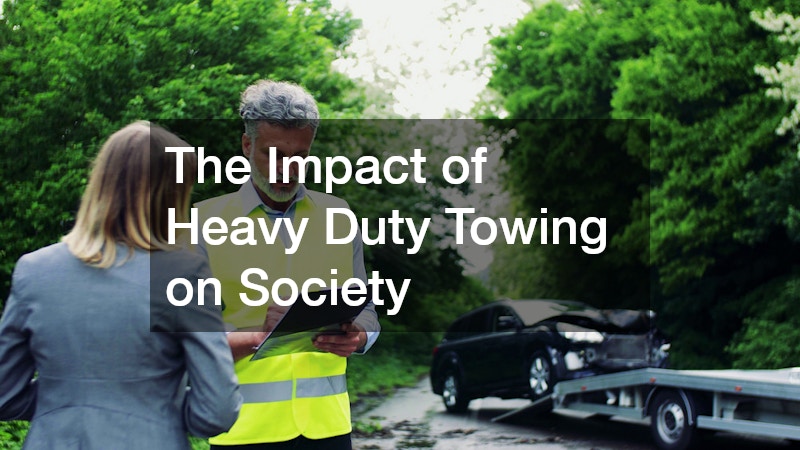
Heavy duty towing plays a critical role in maintaining the operational efficiency of industries and infrastructure. By ensuring that large vehicles can be quickly and safely removed from roads, it supports the unimpeded flow of commerce and transportation. This prompt action prevents longer-term road blockages that could disrupt supply chains and daily commutes. As a result, industries heavily reliant on transportation can maintain schedules and minimize downtime. Thus, heavy duty towing services contribute substantially to economic stability and efficiency.
In addition to its industrial importance, heavy duty towing has a notable impact on public safety. A key function is the removal of potentially hazardous vehicles from busy roads. This action reduces the likelihood of secondary accidents that often occur nearby broken down or crashed vehicles. The swift clearing of these vehicles allows for normal traffic flow, reducing congestion and the frustrations associated with stalled traffic. Consequently, heavy duty towing services directly enhance road safety for all users.
Environmentally, efficient heavy duty towing also plays a role in reducing the ecological footprint of road incidents. By minimizing fuel wastage from idling vehicles stuck in traffic and reducing accident-related emissions, it supports environmental conservation efforts. Effective procession of heavy duty tows helps decrease the negative impacts of roadside emergencies on natural ecosystems. Such contributions align with broader initiatives aimed at creating sustainable and responsible transportation networks. Therefore, the influence of heavy duty towing extends beyond immediate mechanical needs to encompass broader societal benefits.