The open road holds an unmistakable appeal. Whether you are planning a cross-country family vacation, a coastal drive, or a mountain getaway, packing up your vehicle and driving toward a new destination offers a sense of freedom that air travel simply cannot match. However, the excitement of a long-distance adventure can quickly vanish if your vehicle encounters a mechanical failure miles away from the nearest town.
A successful road trip relies as much on proper vehicle preparation as it does on choosing scenic routes or booking hotel rooms. Cruising at highway speeds for hours on end puts sustained heat, friction, and stress on every mechanical system in your automobile. By taking proactive steps to inspect vital components, perform necessary preventative maintenance, and organize emergency contingencies, you can protect your passengers and enjoy a stress-free journey.
This comprehensive guide breaks down actionable steps to ensure your automobile is fully prepared for any journey long before you hit the highway.
1. Audit Essential Engine Systems and Check Vital Fluids Before Heading Out
Perform Comprehensive Pre-Trip Mechanical Inspections
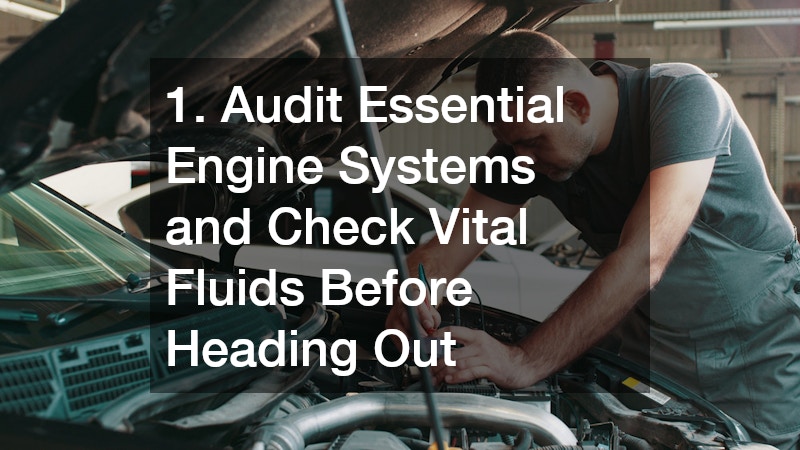
Before embarking on a multi-hundred-mile trip, schedule a complete multi-point inspection with a trusted service facility specializing in local auto repair weeks before your planned departure date. Waiting until the day before you leave gives you zero margin to address unexpected issues found during a routine inspection.
A thorough pre-trip inspection should cover all major fluid reservoirs, rubber belts, cooling lines, and chassis components. Inspecting fluid levels involves more than just checking quantity; it requires evaluating fluid condition. Engine oil should be clean and free of dark sludge, while engine coolant should maintain its bright color without signs of rust or oily residue. Checking power steering fluid, windshield washer fluid, and brake fluid ensures that all hydraulic and protective systems operate within manufacturer specifications throughout your drive.
Address Transmission Care and Drivetrain Integrity
Long-distance highway driving demands continuous effort from your vehicle’s transmission. Sustained high speeds generate considerable heat within the gearbox, making fluid degradation and gear slipping far more hazardous during a trip.
If you notice delayed gear engagement, erratic shifting patterns, or burnt-smelling transmission fluid, arrange necessary auto transmission repairs prior to placing heavy highway mileage on your vehicle. Replacing worn friction plates, installing fresh transmission filters, or flushing degraded fluid protects the internal gears from overheating. Additionally, inspect drive belts, serpentine belts, and radiator hoses for subtle cracks, dry rot, or loose tension. A snapped belt on a remote stretch of highway will instantly stall your alternator and water pump, bringing your road trip to an abrupt halt.
2. Maximize Highway Stability, Traction, and Tread Longevity
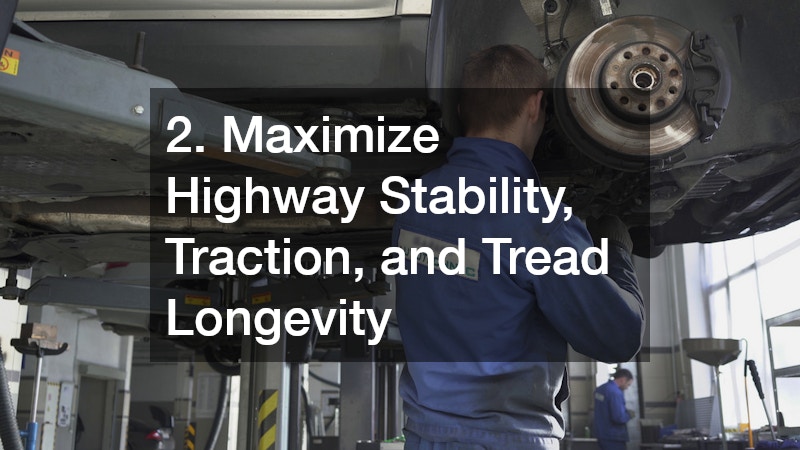
Optimize Tire Tread and Suspension Precision
Your tires are the only point of physical contact between your vehicle and the road surface. Ensuring proper tire health is critical for high-speed stability, wet-weather traction, and fuel efficiency during long drives.
Schedule a precision wheel alignment to eliminate highway pulling, uneven tread wear, and steering wheel vibrations at cruising speeds. Driving with misaligned wheels forces your engine to work harder, accelerates tire wear, and causes driver fatigue as you constantly correct the steering wheel.
To maintain optimal tire health before departure, complete the following checks:
- Measure tread depth across all four tires using a dedicated gauge or penny test to ensure adequate water dispersion channels.
- Set cold tire inflation pressures according to the specific figures on your vehicle’s driver-side door jamb placard, not the maximum pressure stamped on the tire sidewall.
- Inspect the spare tire for proper air pressure, dryness, or rot, and verify that the jack, lug wrench, and wheel lock key are present in the trunk.
- Rotate tires if they show subtle wear variations between the front and rear axles to promote even wear across long highway stretches.
Inspect Stopping Power and Heavy Load Systems
Carrying heavy luggage, coolers, and extra passengers places additional strain on your vehicle’s braking system. High-speed highway stops require responsive friction materials that can dissipate heat rapidly without fading.
Book a comprehensive brake repair if you experience squealing, grinding metallic noises, or a soft, spongy brake pedal when slowing down. Technicians should measure brake pad thickness, inspect rotors for heat glazing or warping, and check brake lines for fluid weeping. Furthermore, inspect your shock absorbers and struts. Worn suspension components cause excessive body roll, bounce over highway dips, and increase stopping distances when your vehicle is loaded to capacity.
3. Equip Your Vehicle With Quality Components and Address Luxury or Off-Road Needs
Prepare Luxury and Specialized Vehicles for Long Travels
Modern utility vehicles and luxury sedans feature sophisticated electronic management systems, adaptive air suspensions, and complex all-wheel-drive transfer cases. These specialized systems require specific diagnostic tools and trained eyes to identify subtle fault codes before traveling through regions with limited service availability.
Owners of high-end, air-suspension, or specialized 4WD vehicles should book local Range Rover auto repairs or brand-specific service to address complex electronic and air-ride vulnerabilities. Air suspension bags can develop micro-tears that leak slowly under heavy cargo loads, leading to compressor burnout on long drives.
Specialized pre-trip preparations for luxury and off-road vehicles include:
- Testing all terrain-response modes, low-range transfer cases, and electronic differential locks prior to remote travel.
- Checking air suspension compressor health, air lines, and ride-height sensors for physical wear or air leaks.
- Updating onboard navigation software and touchscreen firmware to ensure accurate GPS routing in remote areas.
- Inspecting auxiliary battery systems that power secondary electronics, fridges, or convenience features.
Source High-Grade Replacement Parts and Filters
Using cheap, low-grade replacement parts for last-minute maintenance often backfires on long trips. Subpar rubber seals, low-quality oil filters, and cheap spark plugs are prone to premature failure under high thermal stress.
Source reliable replacement belts, air filters, wiper blades, and ignition components through reputable auto part services to prevent minor component failures far from home. Swapping out a clogged engine air filter improves fuel economy across hundreds of highway miles, while installing fresh cabin air filters keeps your climate control system blowing clean, dust-free air. Fresh windshield wiper blades paired with high-performance washer fluid ensure clear visibility during sudden summer downpours or bug-heavy night drives.
4. Ensure Clear Visibility and Prepare Contingency Plans for Unexpected Road Hazards
Address Exterior Condition, Lighting, and Glass Integrity
Clear visibility and structural integrity are crucial for night driving and unpredictable weather conditions. Small windshield chips or misaligned headlights can quickly turn into major safety liabilities on open highways.
Visit an expert facility offering auto body services to fix minor structural latch issues, repair windshield stone chips before heat causes them to crack across the glass, or restore foggy, oxidized headlight lenses. Clear headlight lenses project light significantly farther down dark rural highways, giving you precious extra seconds to react to deer or road debris.
A complete exterior safety check should cover the following points:
- Confirm that all exterior illumination—including brake lights, turn signals, high beams, reverse lights, and fog lights—is fully functional.
- Inspect the hood latch mechanism and safety catch to ensure the hood remains locked at high speeds.
- Clean all exterior glass surfaces inside and out to eliminate night-driving glare from oncoming traffic.
- Check door weatherstripping to ensure rain seal integrity and reduce high-speed wind noise inside the cabin.
Establish Roadside Assistance and Emergency Protocols
Even the most meticulously maintained vehicle can encounter an unexpected flat tire, road debris puncture, or dead battery. Having a plan in place eliminates panic and keeps your travel party safe while waiting for help.
Save the contact information for a national or localized towing service directly on your mobile phone, and double-check your roadside assistance policy limits regarding distance allowances and extrication coverage. Keep a physical printout of emergency numbers inside your glove box in case your phone battery dies or you lose cellular signal.
Prepare an emergency road kit containing essential safety gear:
- Heavy-duty jumper cables or a portable lithium-ion jump starter pack.
- A digital tire inflator powered by your vehicle’s 12V outlet, along with a tire plug kit.
- LED roadside flares or reflective safety triangles to mark your position at night.
- A fully stocked first-aid kit, multi-tool, flashlights with extra batteries, and basic hand tools.
- Non-perishable snacks, emergency blankets, and several gallons of clean bottled water.
5. Assess High-Mileage Risks and Complete Final Test Drives
Evaluate Major Systems and Complete Last-Minute Fixes
High-mileage vehicles require extra scrutiny before attempting long journeys. As engines age, internal components like timing belts, water pumps, oil seals, and head gaskets experience cumulative wear that can result in sudden, catastrophic breakdown under sustained load.
Evaluate high-mileage or heavily worn engines thoroughly before embarking; in severe cases where structural or mechanical reliability is deeply compromised, weigh major system overhauls or an engine replacement against buying or renting a vehicle for the trip. If your current powertrain shows signs of low oil pressure, severe compression loss, or chronic overheating, pushing it through a demanding road trip poses a high financial risk.
Complete any necessary minor car repairs—such as fixing a noisy air conditioning compressor, addressing an active check engine light, replacing a weak battery, or fixing a sticky power window regulator—at least one week prior to your departure date. Resolving minor issues early ensures you are not dealing with discomfort or dashboard warning lights during your drive.
Additionally, consider checking the tire pressure and fluid levels to avoid any potential issues on the road. A little proactive maintenance can make your trip much more enjoyable and stress-free.
Manage Cabin Climate Control and Passenger Ergonomics
Beyond mechanical health under the hood, passenger comfort plays a massive role in maintaining driver alertness during multi-hour highway stints. An air conditioning system that struggles in suburban traffic will fail completely when forced to cool a sun-baked cabin across vast stretches of desert or open asphalt.
Have a technician check the refrigerant levels, condenser fins, and blower motor of your heating and air conditioning system well before departure. Clean out the cabin air intake ducts of leaves and pine needles to ensure maximum airflow throughout the vehicle.
To streamline interior comfort and driver ergonomics for the long haul, implement these interior prep strategies:
- Adjust driver seat lumbar supports and steering wheel position to minimize lower back strain during extended drives.
- Organize passenger seating zones by packing slim seatback storage organizers for tablets, charging cables, and water bottles.
- Place easily accessible trash containers throughout the vehicle to prevent cabin clutter from accumulating around control pedals.
- Check that all 12V power ports and USB charging connections function consistently across all rows of seating.
Execute a Final Pre-Departure Shake-Down Run
Never complete major mechanical repairs and immediately head out on a long road trip the next morning. Freshly installed parts need time to seat, and technicians occasionally need to adjust fluid levels or tighten fittings after an initial thermal cycle.
Take a 30-to-50-mile highway test drive a few days before your scheduled departure. Use this shake-down run to monitor engine temperatures, listen for unusual suspension noises, test your cruise control, and verify that all dashboard warning lights remain off. Experiencing a loose hose clamp or minor fluid drip near your hometown is an easy fix; discovering it three states away is a major disruption.
Additionally, make sure to check your tires for proper inflation and tread wear, as a flat or blown tire can lead to unexpected delays. It’s also a good idea to test your headlights, brake lights, and turn signals to ensure all are functioning properly. This proactive approach will help you enjoy a smoother and safer journey, allowing you to focus on the adventure ahead.
Conclusion
A successful, memorable road trip begins long before you load your luggage into the trunk. By systematically inspecting vital engine fluids, verifying tire and suspension stability, sourcing quality replacement components, and packing a comprehensive emergency kit, you insulate your vacation against unexpected mechanical setbacks.
Investing time into pre-trip vehicle preparation protects your financial investment, safeguards your passengers, and grants you total peace of mind on the open highway. Take the time to audit your vehicle, address minor maintenance needs early, and hit the road with complete confidence in your automobile’s reliability.